Fully autonomous
The drone searches and detects on its own – your hands stay free.

FULLY AUTONOMOUS DETECTION DRONE · VOICE REPORTING
Scout Vision from Carinthia, Austria, is a palm-sized, fully autonomous detection drone: it analyses its camera feed in real time, detects people and reports them by voice – with direction and distance – straight into your ear. A working prototype with 30–45 minutes of flight time, explorable in 3D in your browser.
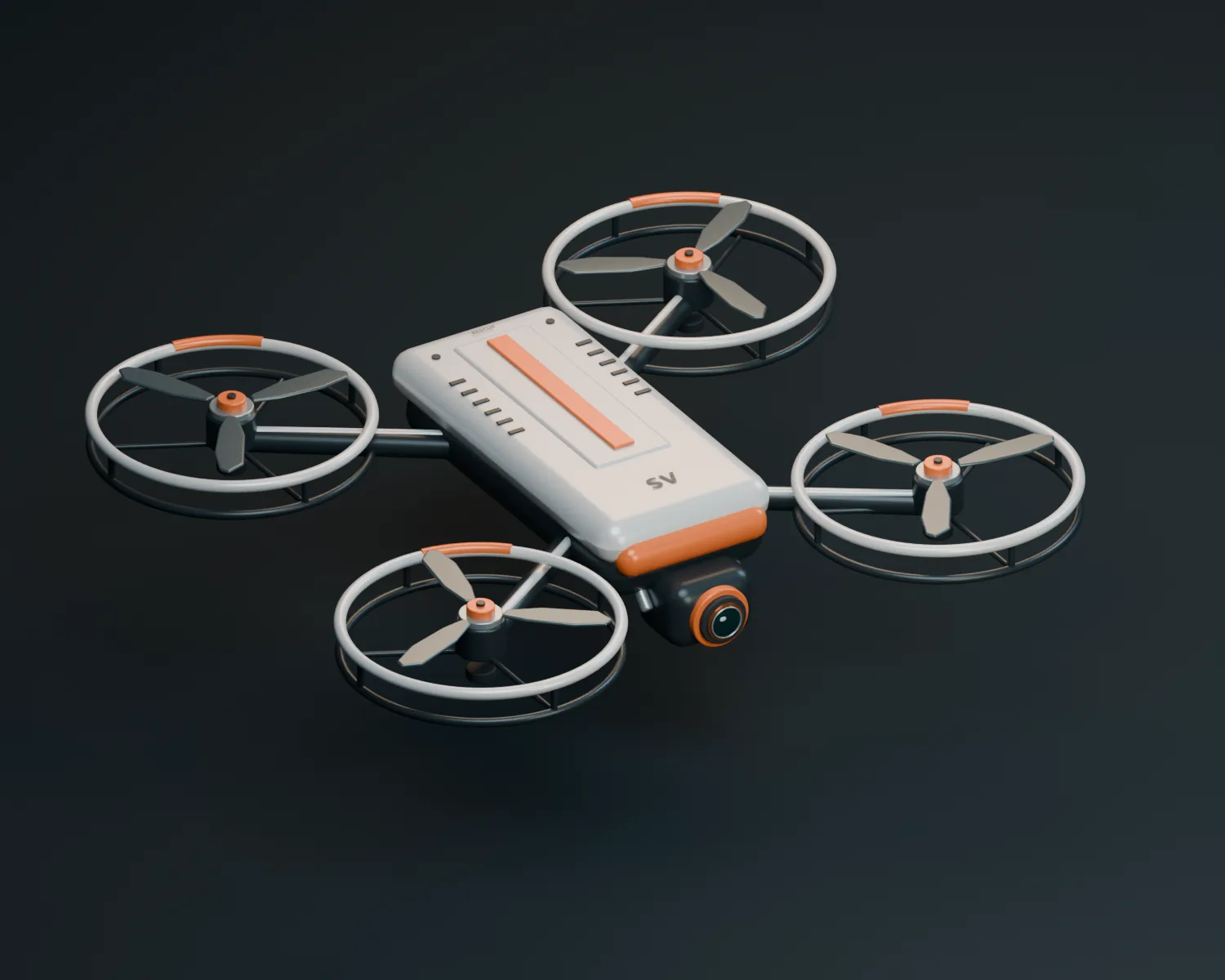
Target drone weightNot yet verified
Devices in one system
Real-time AI detection
01 / THE IDEA
Scout Vision is a compact system for search and orientation: a drone, a phone-sized companion and an earpiece work together – fully autonomous, eyes-free, voice-guided.
The drone searches and detects on its own – your hands stay free.
The AI analyses the camera feed at around 26 frames per second and detects people – locally, with no cloud.
Detections arrive as a voice message in your ear, e.g. “Person spotted, 1 metre to the north-west”.
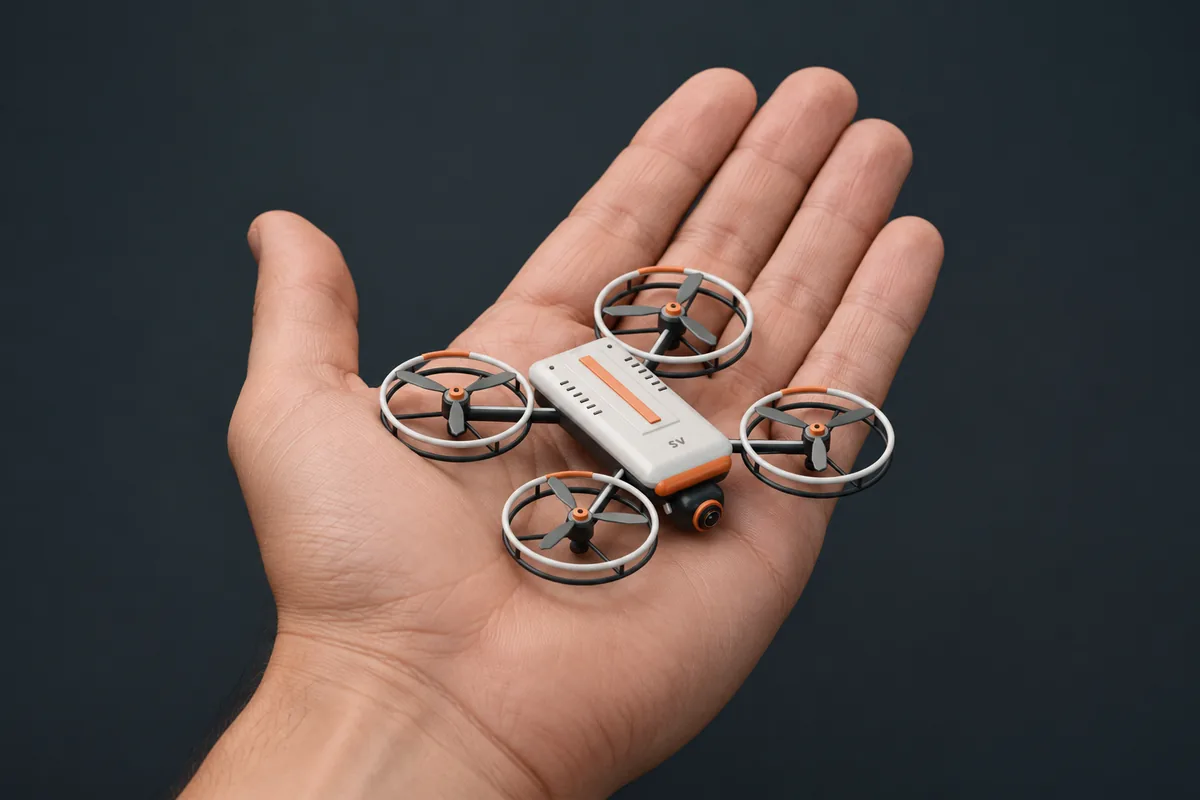
THINK SMALL
The design idea: a drone whose four rotor guards fit within an open palm. This image puts the intended compact size into perspective.
Palm-sized is the design target. Dimensions and the 90 g target weight have not yet been technically validated.
02 / INTERACTIVE EXPLORER
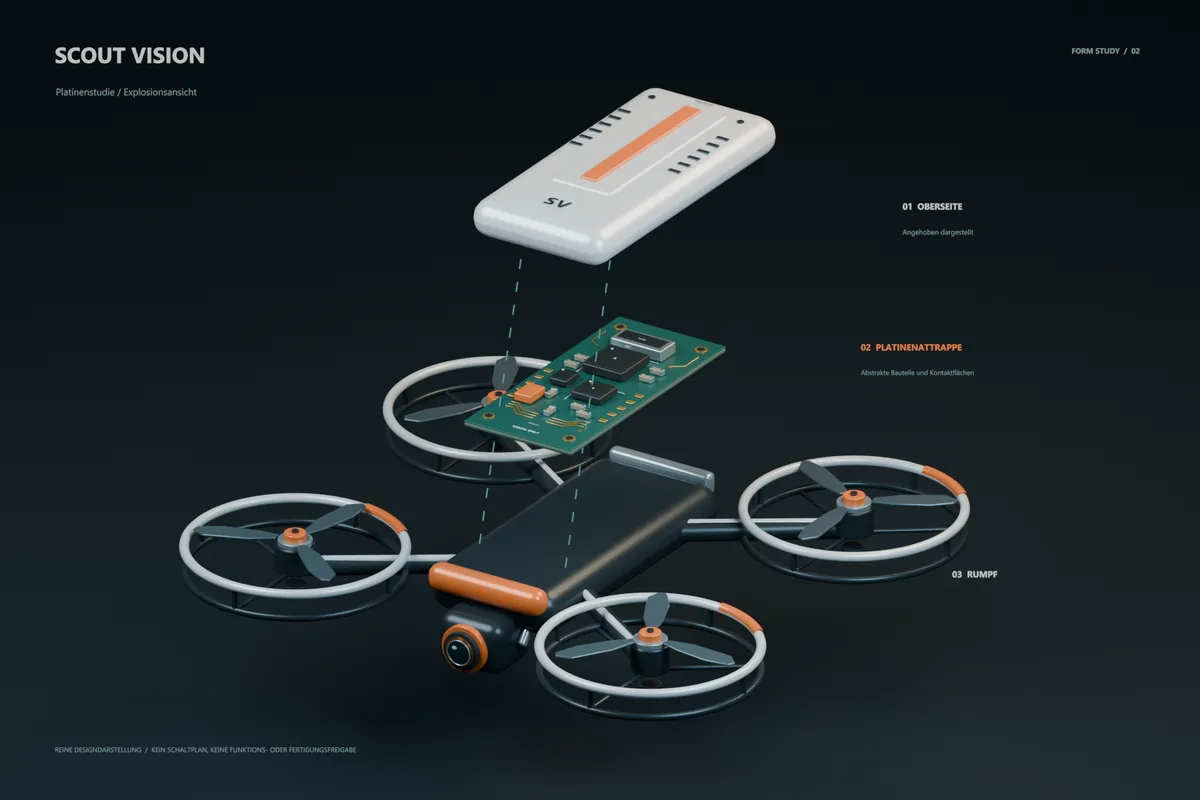
Rotate the drone, pull the model apart and explore its individual forms. This interactive view presents the drone’s Blender model.
WORKING PROTOTYPE
One concept. Every perspective.
03 / DESIGN IN DETAIL
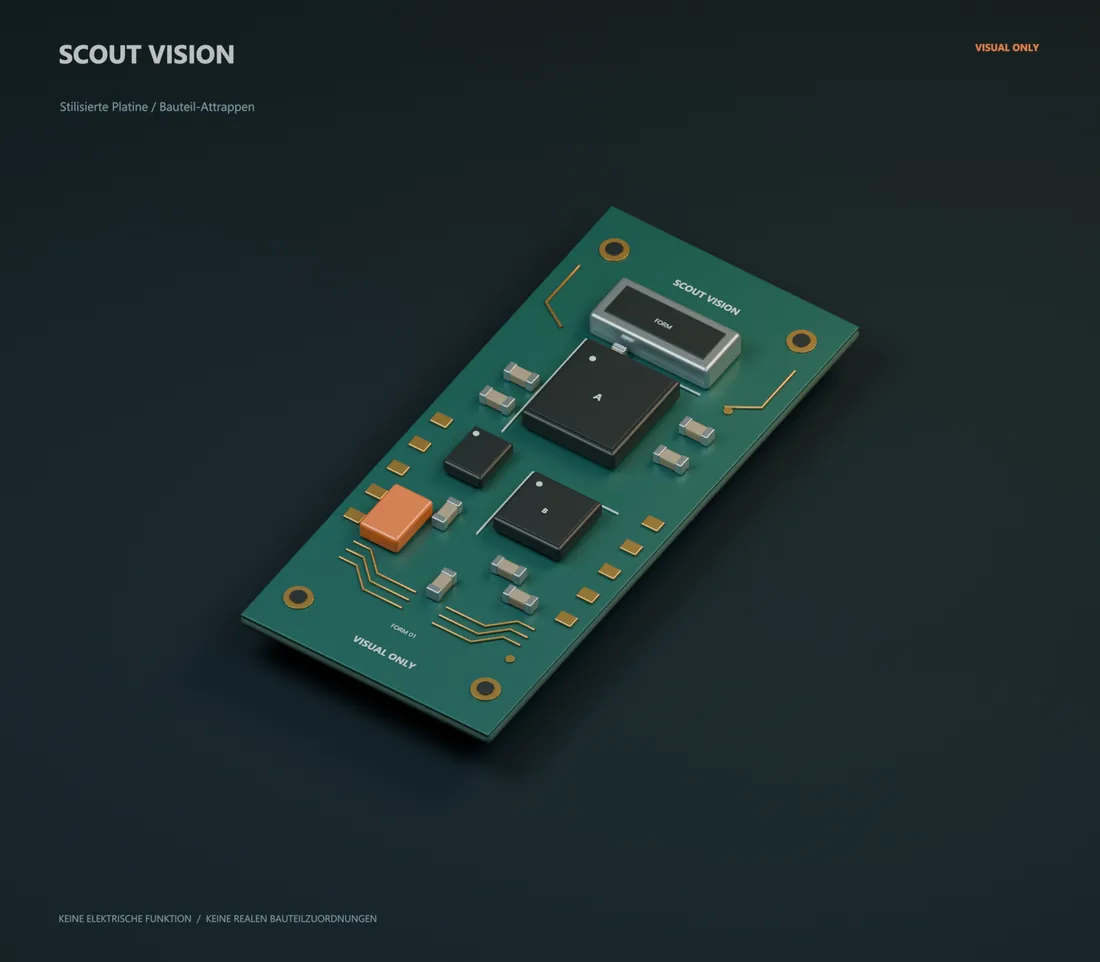
The Blender studies bring the form to life, from the camera housing to the decorative board.
04 / ORIGIN
Made in Austria stands for concept, design and development from Carinthia. Scout Vision is a working prototype – pilot projects with first partners come next.
05 / QUESTIONS & ANSWERS
In brief: what Scout Vision is, how real-time detection and voice reporting work, and what comes next.
Scout Vision is a fully autonomous detection drone from Carinthia, Austria. The system consists of three devices: a palm-sized drone, a phone-sized companion and an earpiece. The drone analyses its camera feed in real time, detects people and reports them by voice – as a working prototype.
Not on the open market yet. Scout Vision is a working prototype; pilot projects with first partners come next. Interested in a pilot project? See the imprint for contact details.
Voice reporting means the drone announces what it detects as a short spoken message straight into your ear – for example “Person spotted, 1 metre to the north-west”. Your eyes stay free and nobody has to look at a screen: fully autonomous, eyes-free, voice-guided.
In principle yes: edge or on-device AI runs directly on the device instead of in a cloud. Scout Vision runs detection locally: the AI analyses the camera feed in real time at around 26 frames per second, with no cloud.
Very small camera drones already exist. For size context, the DJI Neo (around 135 g) or the military nano drone Black Hornet 4 (under 70 g) are often cited – each according to publicly available manufacturer figures. Scout Vision is designed to be palm-sized as a goal; the 90 g target weight is an unverified aspiration, not a measured value.
Three matched devices: a drone for flight and camera view, a phone-sized companion for local AI processing, and an earpiece for the voice reports. Together they form an assistance system for search and orientation.
Yes. The prototype detects people fully autonomously in real time (around 26 frames per second) and reports them by voice with direction and distance. Flight time is 30 to 45 minutes. The 3D explorer on this page shows the drone’s Blender model.
Here "Made in Austria" refers to concept, design and development from Carinthia, by SISASOU / Samuel Raunig. It does not denote certified series manufacturing in Austria.
For search and orientation, for example to get a quick overview from the air. Scout Vision is deliberately designed as a civilian concept and is not aimed at thermal imaging, certified rescue operations or military use.
Right in your browser: the interactive 3D explorer lets you rotate the drone, show or hide individual components and pull the model apart in an exploded view. The visualization is based on the original Blender model and runs without installation.